Taffy by the Food Court: Remembering When the Mall Was America's Candy Counter
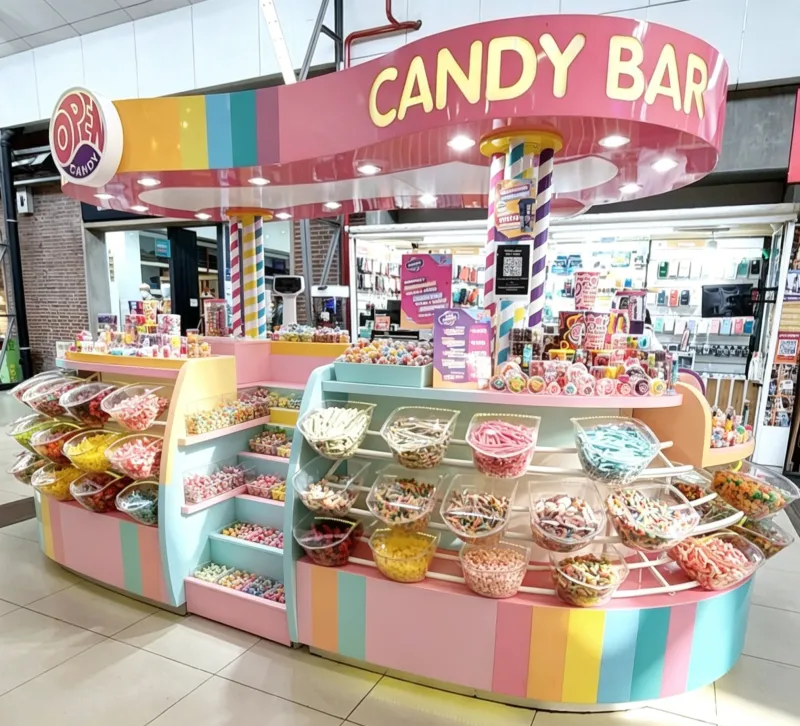
Photo: mall candy kiosk fudge shop retro food court, via rtdisplay.com
Every mall kid remembers the smell. Not the Cinnabon, not the pretzel dough — the warm, buttery fog that rolled out of the candy store and pooled into the corridor like it was paying rent. Fudge being slapped on a marble slab. Chocolate-dipped everything behind glass. A teenager in a striped apron holding out a toothpick with a single caramel on it, free, no strings attached.
That store is mostly gone now. But not entirely. And the people who worked behind those counters have stories.
The Free Sample Was the Whole Business Model
"We gave away more candy than we sold, some days," laughs Denise Alvarado, who managed a fudge kiosk at a Texas mall from 1988 to 1996. "But here's the thing — a kid who takes a sample at ten years old comes back with a paycheck at twenty-two."
The sample tray was strategy. Fudge shops, taffy pullers, and chocolate kiosks all ran on the same math: low overhead, high impulse, and a location with guaranteed foot traffic. You didn't advertise. You stood at the edge of your little glass box and made eye contact with someone holding a food court soda.
"The mall did the marketing for us," Alvarado says. "Ten thousand people walked past my fudge every Saturday. I just had to be the best-smelling thing in the building."
Fudge Kettles, Sock Hops, and the Golden Run
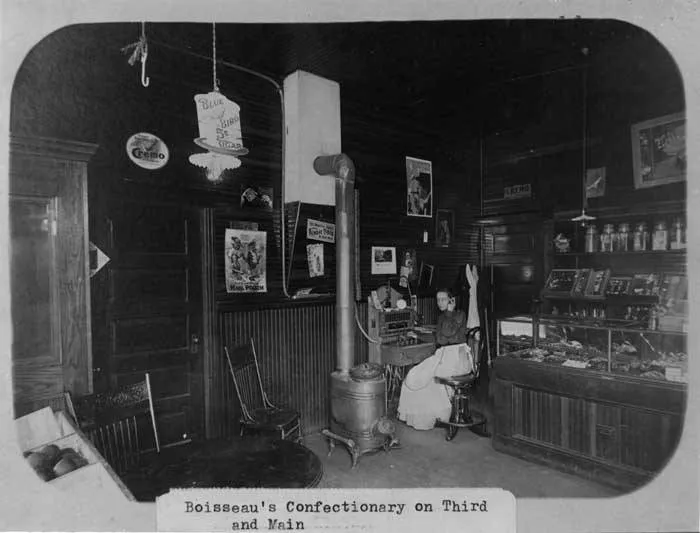
The mall candy store's heyday ran roughly from the early '70s through the late '90s, riding the same wave as the malls themselves. Regional chains and mom-and-pop kiosks alike built their identities around spectacle: fudge folded on marble, taffy stretched in the window, rock candy arranged like geode jewelry.
Some shops leaned into nostalgia even then. A few hosted 1950s-themed events — soda fountain counters, doo-wop on the speakers, penny candy bins as a prop. It worked, because the mall candy store was never really about the mall. It was about the idea that candy should be an occasion.
"Kids would save allowance for a quarter pound of chocolate covered raisins," recalls Marcus Webb, who worked a candy store in an Ohio mall through high school. "They'd take forever deciding. We let them. That was part of the service."
What Shut the Lights Off
The decline wasn't one thing — it was everything at once. Malls lost their anchor status. Rent climbed. Big-box candy aisles at drugstores and supermarkets undercut kiosk pricing. And when retail moved online, a business built entirely on smell, impulse, and eye contact lost its three best tools.
"You can't email someone the smell of fudge," Webb says flatly.
The pandemic delivered the final blow to many of the survivors. When food courts emptied, the candy kiosk — already running thin margins — simply didn't reopen.
The Holdouts
And yet. There are still shops pulling taffy in corridors that smell like the 1990s. Family-run fudge counters in malls from Wisconsin to Tennessee, some in their third decade of operation, kept alive by loyal customers who drive in specifically for them.
"People come to the mall just for us," says one second-generation owner. "They park, they walk straight here, they buy two pounds, they leave. The mall doesn't love that. We do."
Some survivors have adapted — offering shipping, holiday tins, and corporate gifting to offset the shrinking walk-in crowd. Others have doubled down on the show: marble slabs, window taffy pulls, samples front and center. The formula, it turns out, was never broken. The real estate just got expensive.
Why It Still Matters
The mall candy store taught a whole generation how to buy sweets: slowly, in person, by taste. That's a hard habit to lose — which is why J. Carmels readers keep asking where they can still find a proper counter with a marble slab and someone behind it who knows the product.
The kiosks are fewer. The fudge is the same. And if you've got one left in your neck of the woods, do yourself a favor: take the sample, buy the quarter pound, and tip the kid in the striped apron. They're keeping the lights on for all of us.