One Bite, No Charge: The Sweet Science of the Candy Shop Sample
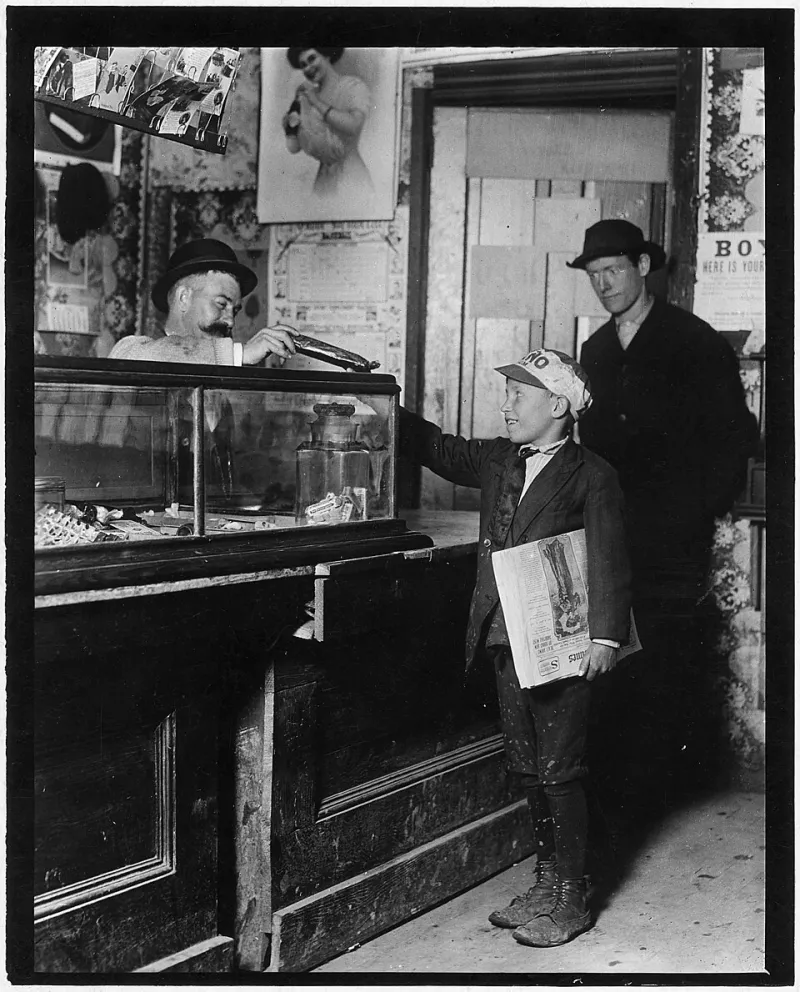
Photo: Lewis Hine, Public domain, via Wikimedia Commons
There's a moment that happens in almost every candy shop in America. A customer walks in, browses for thirty seconds, then catches the eye of whoever's behind the counter. And then comes the question that has launched a thousand sales: "You want to try one?"
The free sample is the confectionery world's most reliable institution. It predates the loyalty card, the email newsletter, and the Instagram reel by about a century. And according to the people who actually run the counters, it's still the single best marketing tool the industry has ever produced.
How the Sample Line Got Started
Nobody signs a patent for the free sample, but the tradition tracks closely with the rise of the American general store and, later, the dedicated candy shop. When your product is made in-house — fudge poured on a marble slab, caramels pulled and cut on the same counter where you bag them — letting a customer taste it isn't a gimmick. It's a demonstration.
"It's the original 'show your work,'" says one shop owner in Michigan, who asked us not to use her name because she's currently negotiating a lease. "I can tell you my sea salt caramel is the best in three counties. Or I can hand you half of one on a napkin and let you figure it out. Guess which one sells more caramels?"
Her answer, in case you're wondering: the napkin. Every time.
The Unwritten Rules of the Sample Counter
Spend enough time around candy shops and you'll learn there's a code. Nobody wrote it down, but everyone follows it.
Rule one: the sample is a bite, not a meal. A sliver of fudge, a single caramel, a small square of toffee. Veterans of the counter know that taking more than offered is the fastest way to get remembered — in the wrong way.
Rule two: if you sample, you consider buying. Nobody's going to chase you out the door over it, but there's a shared understanding. The sample is an invitation, not a buffet.
Rule three: the toothpick goes in the trash, not back in the tray. You'd think this one wouldn't need saying. You'd be wrong.
"I've watched a grown man double-dip a toothpick into honeycomb candy like it was spinach dip," a clerk in a Savannah shop told us. "We had a whole conversation about it. Politely. Eventually."
What Gets Sliced, and Why
Not every candy earns sample status. Shops tend to reserve the toothpicks and wax paper squares for items that need convincing — the flavor that sounds strange on the label but wins people over on the palate. Lavender caramels. Chili-chocolate bark. That goat milk caramel the owner swears by.
Bestsellers rarely need the boost. You don't need to sample a classic milk chocolate cluster; it sells itself. But a new batch of bourbon-butterscotch? That's a sample candidate from the moment it cools.
Seasonality plays a role, too. Fall brings maple and pumpkin samples out of hiding. December counters lean peppermint and toffee. And in the dead of summer, some shops slice cold treats — chocolate-covered marshmallow, refrigerated caramels — mostly as an excuse to get customers standing still in the air conditioning.
Wax Paper, Toothpicks, or Nothing at All
The delivery method is a quiet point of pride. Old-school shops cut samples on squares of wax paper, a practice that feels nostalgic and works practically — the paper doubles as a wrapper for a purchase. Newer spots lean on toothpicks or small cups, especially for anything sticky or soft.
A few places have gone minimalist: "just hold out your hand." It works, but it demands trust on both sides. As one second-generation shop owner in Ohio put it, "If someone's willing to eat caramel off their palm in my store, they've already bought in. Literally, usually."
Why It Still Beats Every Ad Campaign
Here's the thing the digital marketing world keeps rediscovering: taste is the whole product. No photo, review, or influencer video can replicate the moment sugar hits the tongue. The free sample collapses the entire sales funnel into about four seconds.
And the conversion numbers — when shops bother to count — are absurd by retail standards. Multiple owners we spoke with estimated that a majority of samplers buy something, and the ones who don't often come back. "The sample that doesn't sell today sells next Saturday," one told us. "Nobody walks away from a good caramel angry."
There's also something bigger at work. In an era when most retail feels automated and impersonal, the sample counter is a human moment. Someone made this. Someone is handing it to you. Someone wants to know what you think.
That's not marketing. That's hospitality — with a little wax paper under it.
So the next time you're in a candy shop and the person behind the glass asks if you'd like a taste, say yes. Use one toothpick. Throw it away. And maybe walk out with a quarter pound of something you didn't plan on.
The sample line has been winning customers that way for a hundred years. It's not stopping now.