The Glass Between Us: Candy Shops Still Dressing Their Windows by Hand
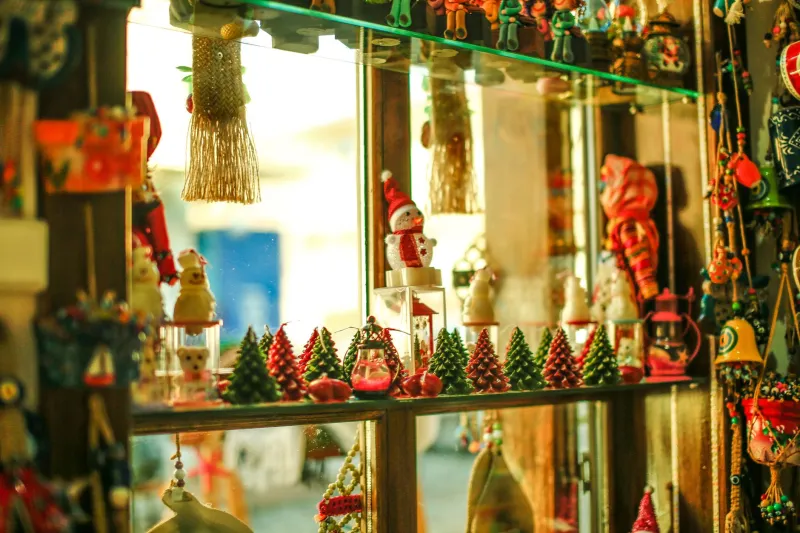
There is a particular sound a candy shop makes in early December: the squeak of a ladder being dragged across hardwood, the rustle of tissue paper, the soft clink of glass jars being shifted two inches to the left. If you walk past after closing time, you might see an owner standing on the sidewalk in a coat, squinting at a window that is almost right and not quite there yet.
That scene is becoming rarer. Holiday window displays at independent candy shops used to be a given, as reliable as ribbon candy and peppermint bark. Today, owners say the tradition is under pressure from rising rents, thin staffing, and the simple fact that more gift shopping happens on a phone than on a Main Street stroll. But in a handful of shops across the country, the ladder still comes out every year.
The Window Is the First Handshake
"People decide whether to come in before they ever touch the door handle," said Lorna Pettibone, who runs a family candy shop in Mystic, Connecticut. "The window is our handshake. If it looks tired, they keep walking. If it looks like something they want to photograph, they come inside and usually leave with a box."
Pettibone starts planning her window in October. This year's theme is a snow-dusted candy counter from the 1950s, built around a borrowed scale, fake snow, and a wallpaper backdrop she found at a estate sale. The candy itself is mostly oversized display pieces, sealed and kept out of reach. Real Inventory goes in the cases, not the window. Still, the effect is meant to suggest abundance: jars, ribbons, striped boxes, a small toy train that circles a pile of wrapped caramels.
The labor is real. Pettibone estimates 45 hours of work, spread across a week of late nights. She does it herself, with help from her nephew and a retired window dresser who lives nearby. "It is not a marketing line item," she said. "It is a craft project that happens to sell candy."
What the Window Actually Returns
Owners who still build elaborate displays are quick to say the window is not pure sentiment. It moves product. A well-dressed holiday window creates a pause on the sidewalk, and a pause is the first step toward a gift purchase. Shops in walkable downtowns report that their strongest gift-box weeks follow the unveiling of a new window, especially when the display invites people to step closer.
In Wisconsin, a confectioner named Dale Kessler has been building a holiday window for 19 years. His shop sits on a corner with heavy foot traffic from a nearby Christmas market. Kessler says the window does something a social media ad cannot: it gives people a reason to come inside with their guard down.
"Online, you are competing with everything," he said. "In the window, you are competing with the bakery next door and maybe a cold wind. If you can make someone smile for three seconds, you have a chance."
Kessler's displays are modest by big-city standards: a wooden sleigh, a pile of wrapped toffee boxes, a string of warm bulbs. But he changes the arrangement every few days, shifting the sleigh and restocking the display boxes so the window looks alive. "A static window becomes wallpaper," he said. "People stop seeing it."
The Costs Behind the Cute
The reasons the tradition is fading are not mysterious. Commercial rents in desirable downtowns have climbed for years, and many candy shops operate on thin margins. A window display takes time from owners who are already covering shifts, ordering inventory, and packing online orders. Insurance and fire codes can limit what can be displayed, especially anything that looks edible or uses older lighting.
There is also the attention economy. A shop can post a photo of its window and reach thousands of people in an afternoon. But that same shop is expected to post again tomorrow. The physical window, by contrast, is a slow medium. It rewards the person who walks by, not the person who scrolls past.
"I love the window, but I cannot pretend it is free," said Marisol Vega, who owns a candy shop in Tucson, Arizona. "Every hour I spend on it is an hour I am not doing something else. Some years I think, this is the year I scale back. Then a kid stands outside with their face against the glass, and I am back on the ladder."
Vega's shop leans into a desert holiday theme: cactus-shaped lollipops, warm-toned lights, and a fake snow that looks suspiciously like crushed graham crackers. She says the window brings in tourists who might otherwise buy candy at a gas station or skip the stop entirely. Gift boxes spike in the final two weeks of December.
The Algorithm Cannot Fog the Glass
Social media has changed the window's job, but it has not eliminated it. Owners say the best displays are the ones that make people stop and take a photo, because that photo travels. A tagged shop gets free reach. A window with a clear focal point, good light, and a little humor tends to outperform a tasteful but generic arrangement.
The catch is that the algorithm rewards novelty, and a holiday window is seasonal by design. It cannot compete with a feed that refreshes every hour. What it can do is create a physical memory: the smell of chocolate, the sound of a bell on the door, the feeling of a small shop that bothered to make something by hand.
"Nobody remembers the third ad they saw today," Kessler said. "People remember the window where the train got stuck and the owner came out with a screwdriver."
A Small Rebellion Against the Scroll
Not every shop can afford a holiday window, and not every owner wants to spend December on a ladder. That is fair. But the ones who do are holding onto something that feels increasingly valuable: a storefront that asks you to look up from your phone and stand in the cold for a minute.
Pettibone says she will keep building her window as long as her knees allow it. She has no grand theory about the future of retail. She just knows that the window is the one piece of marketing she can control completely, from the first strip of tape to the last dusting of fake snow.
"The internet is very good at showing people what they already want," she said. "A window can show them something they did not know they were looking for. That is still worth a few late nights."