The Tell-Tale Tray: What Your Holiday Candy Swap Says About Where You're From
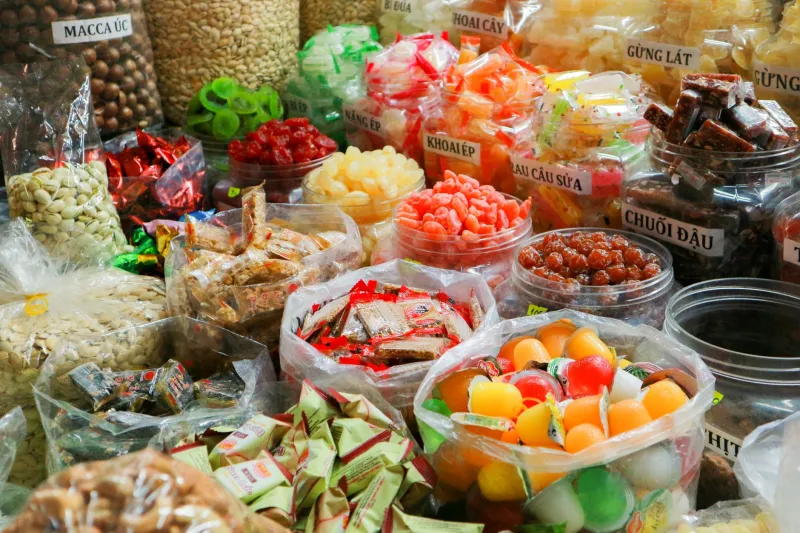
Every December, the same scene unfolds in break rooms and elementary school hallways across the country: a table covered in plastic wrap, tiny gift bags, and a whole lot of guessing. The holiday candy swap is a humble tradition, but look closely and it becomes something else entirely — a Rorschach test for regional identity, a crash course in allergy etiquette, and a small honesty machine. When you buy candy for someone else, you almost always buy the candy you grew up with.
The Swap Is a Mirror
Ask a room full of coworkers to bring a treat for the exchange and watch what lands on the table. The person from Ohio brings buckeyes. The one from Louisiana brings pralines. Someone from the Pacific Northwest slips in a box of huckleberry taffy, and a New Englander sets down peppermint bark with the quiet confidence of someone who knows exactly what December tastes like. Nobody announces their regional loyalty. They don't have to. The tray does it for them.
This is the first lesson of the holiday swap: most of us are not really shopping for the recipient. We are shopping for a memory. That's not a flaw. It's the charm. A swap full of personal favorites beats a swap full of generic fun-size bars every time.
A Rough Regional Map (With Caveats)
Treat this as a conversation starter, not a rulebook. Candy tastes travel, families blend, and plenty of people grew up on the opposite side of the country from where they live now. Still, certain patterns show up again and again.
Northeast: Maple sugar candy, peppermint bark, chocolate-covered cranberries, and the occasional old-school ribbon candy. There's a strong pull toward mint and dark chocolate.
South: Pralines, pecan clusters, divinity, and bourbon balls — the latter often flagged with a handwritten note because not everyone wants a boozy bite. Sweet potato and sorghum show up more than outsiders expect.
Midwest: Buckeyes, toffee, turtles, and caramel apples cut into shareable slices. The Midwest brings the most structurally generous trays, in our experience.
West: See's boxes, huckleberry or marionberry chews, and locally made saltwater taffy. California swaps lean toward high-quality chocolate; the Pacific Northwest leans tart and fruity.
Southwest: Chile-spiked chocolate, tamarind candies, and a growing presence of Mexican confectionery traditions that have been part of the region for generations.
The Allergy Conversation Nobody Wants to Start
Here's where the swap gets real. In 2026, allergy awareness is not optional. Nut-free, dairy-free, gluten-free, and sesame-free requests are common, and a good host plans for them without making anyone feel like a problem.
A few practical moves:
- Label everything. Even the store-bought stuff. A sticky note with the brand name and a quick ingredient summary saves a dozen awkward questions.
- Set up a separate allergy-safe tray and make it visible. Don't bury it at the end of the table.
- Keep homemade items clearly marked with ingredients. "Mystery fudge" is charming in theory and stressful in practice.
- Offer a non-food option — a small candy-themed ornament, a nice mug, a bag of local coffee. Not everyone wants sugar, and that's fine.
Hosting a Swap That Feels Generous
A holiday candy swap can easily slide into generic territory: a pile of identical chocolate boxes, a bowl of peppermints, a collective shrug. It doesn't have to. The best swaps have a little structure and a lot of personality.
Ask for a one-line candy biography. When people RSVP, have them share the candy they loved most as a kid. It gives the swap a theme and takes the pressure off anyone who doesn't consider themselves a candy expert. It also produces the best conversations of the day.
Set a price cap, not a price floor. A five-dollar limit encourages creativity. A twenty-dollar expectation encourages panic-buying.
Provide labels and small bags. People want to try a bite of everything. Make it easy for them to take a little home without feeling greedy.
Create a "try me" table and a "take home" table. The try-me table is for open boxes and samples. The take-home table is for wrapped portions. This one small layout choice keeps the swap from turning into a free-for-all.
Include a few universally safe options. Plain chocolate, hard candy, and fruit chews are reliable. So is anything clearly labeled nut-free and gluten-free.
The Generic Trap
We all know the swap-day default: a giant bag of fun-size bars, purchased at the last minute, technically fine and utterly forgettable. The candy swap is one of the few gift occasions where specificity is easy and cheap. A single excellent caramel, a small box of regional taffy, a bag of locally made peppermint bark — these cost roughly the same as the generic bag and land ten times harder.
The swap is not about volume. It's about the story. When someone opens your gift and says, "Oh, my grandmother used to keep these in her purse," you've won the exchange. That's the whole game.
What the Tray Tells Us
After a few decades of office swaps and classroom parties, the pattern is clear: we give what we miss. We give what we grew up with. We give the thing that still tastes like December to us, and we hope it tastes like December to someone else too. In 2026, with more dietary needs on the table and more regional candies available online than ever, the swap is getting more interesting, not less. Bring something you love. Label it clearly. Leave room for everyone. That's the whole etiquette.